Part 2 — The Circle of Life
Our next foray into the new world of do-it-yourself healthy living came when my wife developed an interest in raw milk and cheese making. Convinced of the superior health properties and obsessed with sourcing hyper-local, organic, minimally processed foods, she searched for a local milk producer that would sell non-pasteurized milk and cream in micro batches to a normal consumer. While there was a very local goat farm that fit the bill for milk, goat's milk does not separate easily into cream because the fat globules are much smaller than in cow's milk, resulting in the cream remaining suspended in the milk instead of rising to the top. Also, goat milk does not contain agglutinin, a compound found in cow milk which enables the fat globules to cluster and rise to the top. Because of this, goat's milk is naturally homogenized and a cream separator is needed to produce goat cream. Most small farmers are not willing to go to this level of effort and expense for a relatively minimal return in profits. Cow's milk, on the other hand, easily separates on its own, allowing the consumer to purchase milk and separate the cream themselves at home.
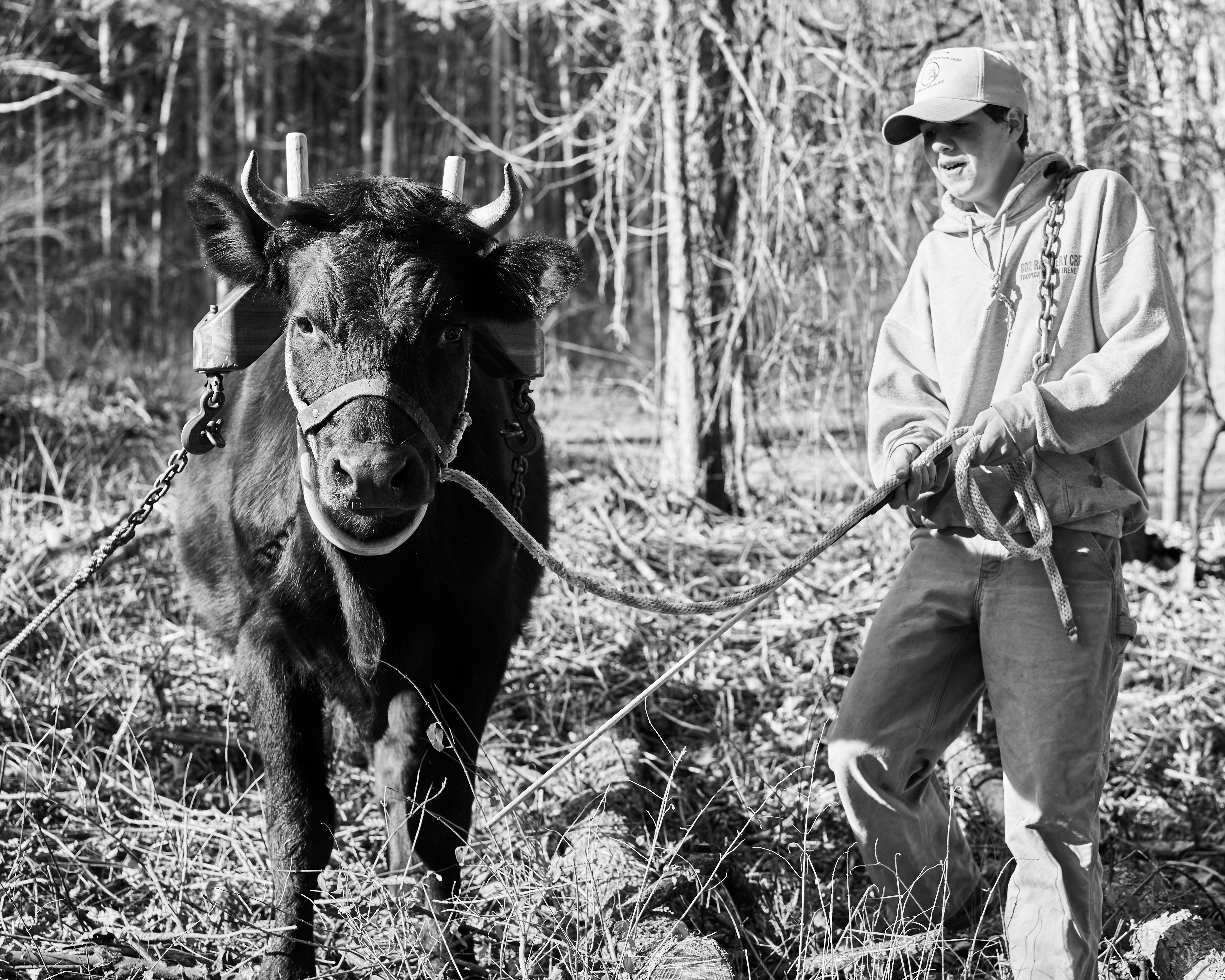
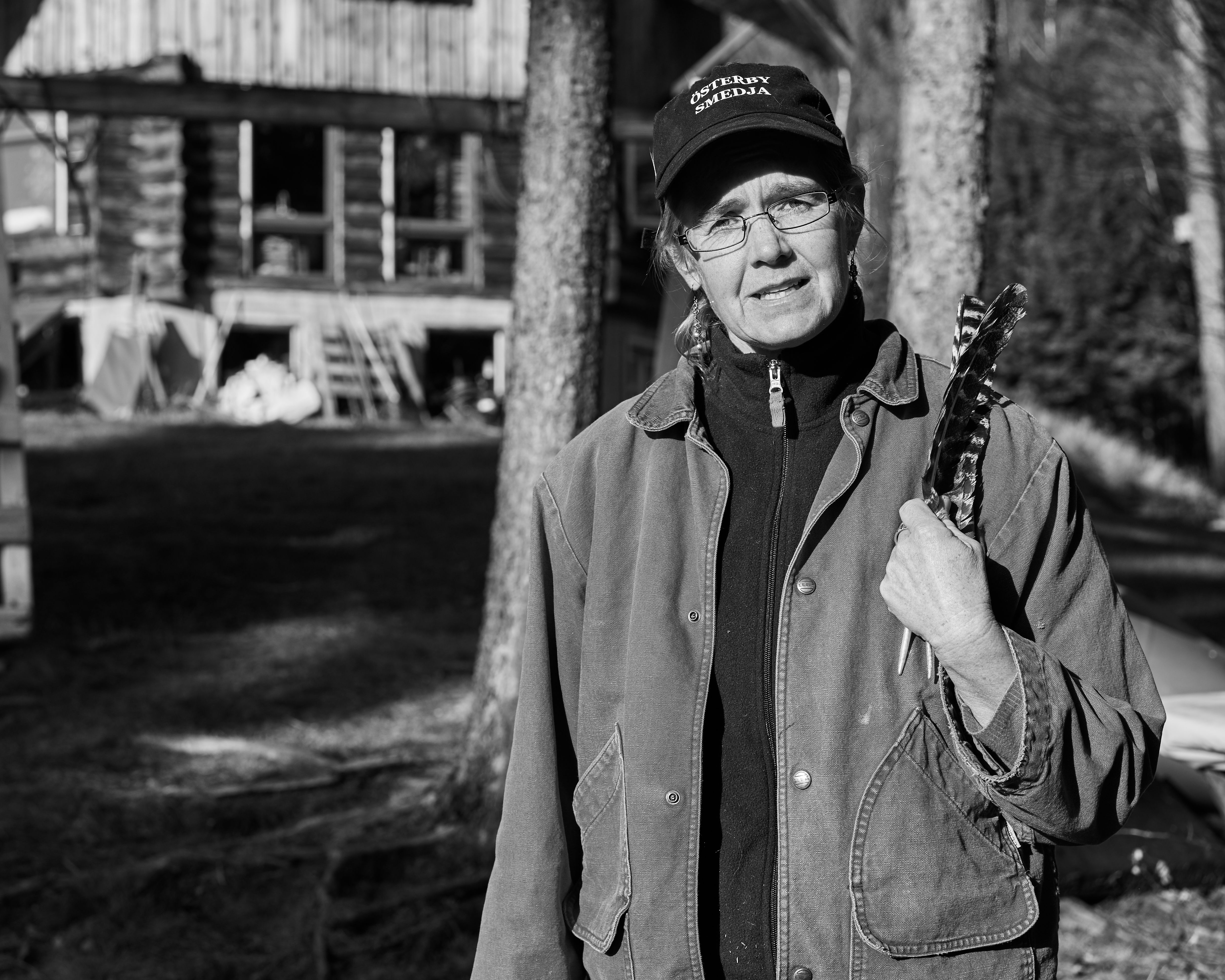
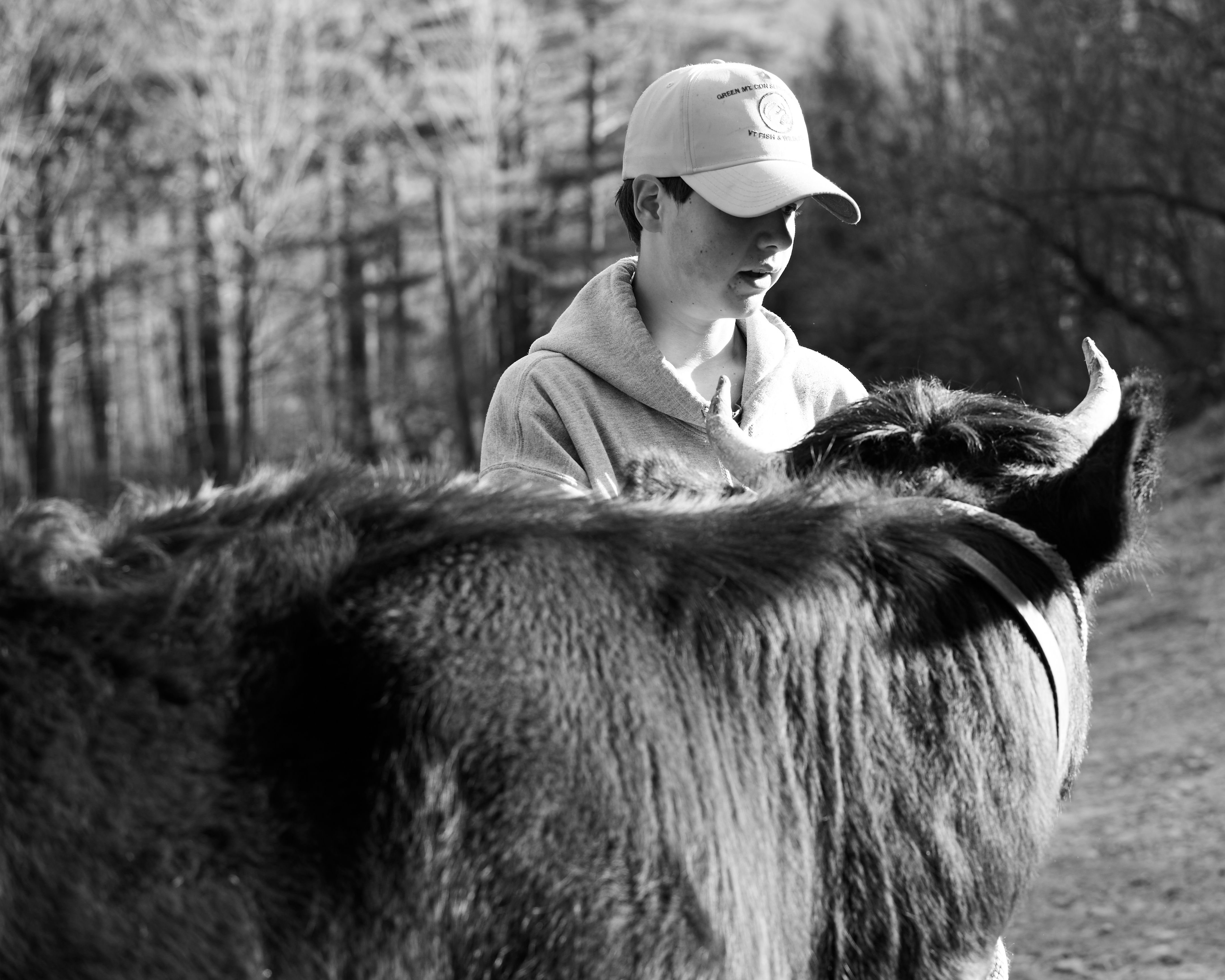
The search for an organic raw milk producer of high repute (you can't be too careful when it comes to raw dairy) took us to Earthwise Farm & Forest in Randolph, Vt. Lisa and Carl operate Earthwise as a certified organic, draft-animal powered family farm. They produce and sell certified organic milk, poultry (chicken and heritage turkey), beef, garlic, vegetables, flowers, and non-organic (though gmo-free) eggs, pork, and lumber. Their goal is to function as a self-sufficient 'whole farm organism', applying ecological principles of holistic management, biodynamics, dowsing, motive (animal) power, and renewable energy to create healthy vibrant food and forest products for our family and our local community. Everything on their farm is raised using a process of intention and intuition to validate the unseen energy of Life's creative process. The very name of the farm points to their belief in the inherent wisdom of established processes of the Earth, and that as we work to secure what we need from the land, we also need to validate those processes as our most valuable resources.
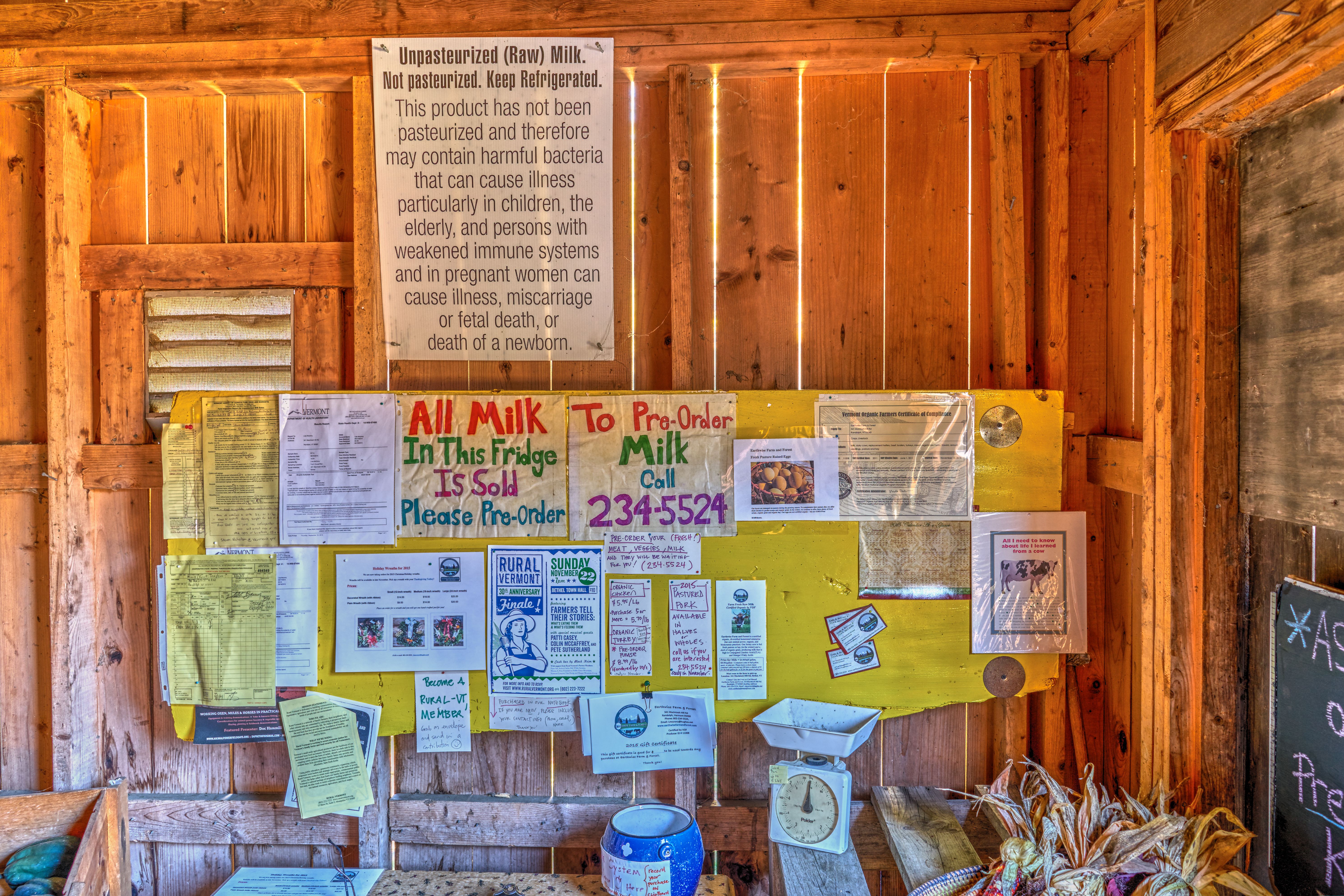
Lisa was our primary contact at the farm and took us on our tour of her milk facility, carefully explaining the rules of raw milk sales in our state, showing us how the milk was gathered and stored, how it was unprocessed by the farmer, and provided to us in its natural state. Thanks to strict regulation at that time, all raw milk must be purchased at the farm where it was gathered. State law has since changed to allow for raw milk sales at farmers markets once the customer has visited the farm site and signed a waiver of understanding about the potential health hazards of consuming unpasteurized dairy products. Indeed, this is where knowing your farmer and being able to trust in their knowledge of best practices, small-scale production, and dedication to the health of the animal and cleanliness of process is of utmost importance. The vast majority of foodborne illnesses originate in large-scale factory farm situations which house animals in dirty and crowded conditions and rely heavily on antibiotics and pasteurization to make the end product something that somewhat resembles food and hopefully doesn't act as a poison to the human body.
As we got to know Lisa and Carl, we branched out from raw milk to purchasing heritage turkeys, organic root vegetables, and bulk orders of beef. All of their animals are raised right there on their farm with no antibiotics, no pasteurization, mostly organic feed, and shown careful attention and treated in a humane and loving manner. The difference in nutrition and taste is obvious and it comes at a premium. We pay more for food than most people we know and we never eat out. But the health and vitality we receive are worth the cost every time.
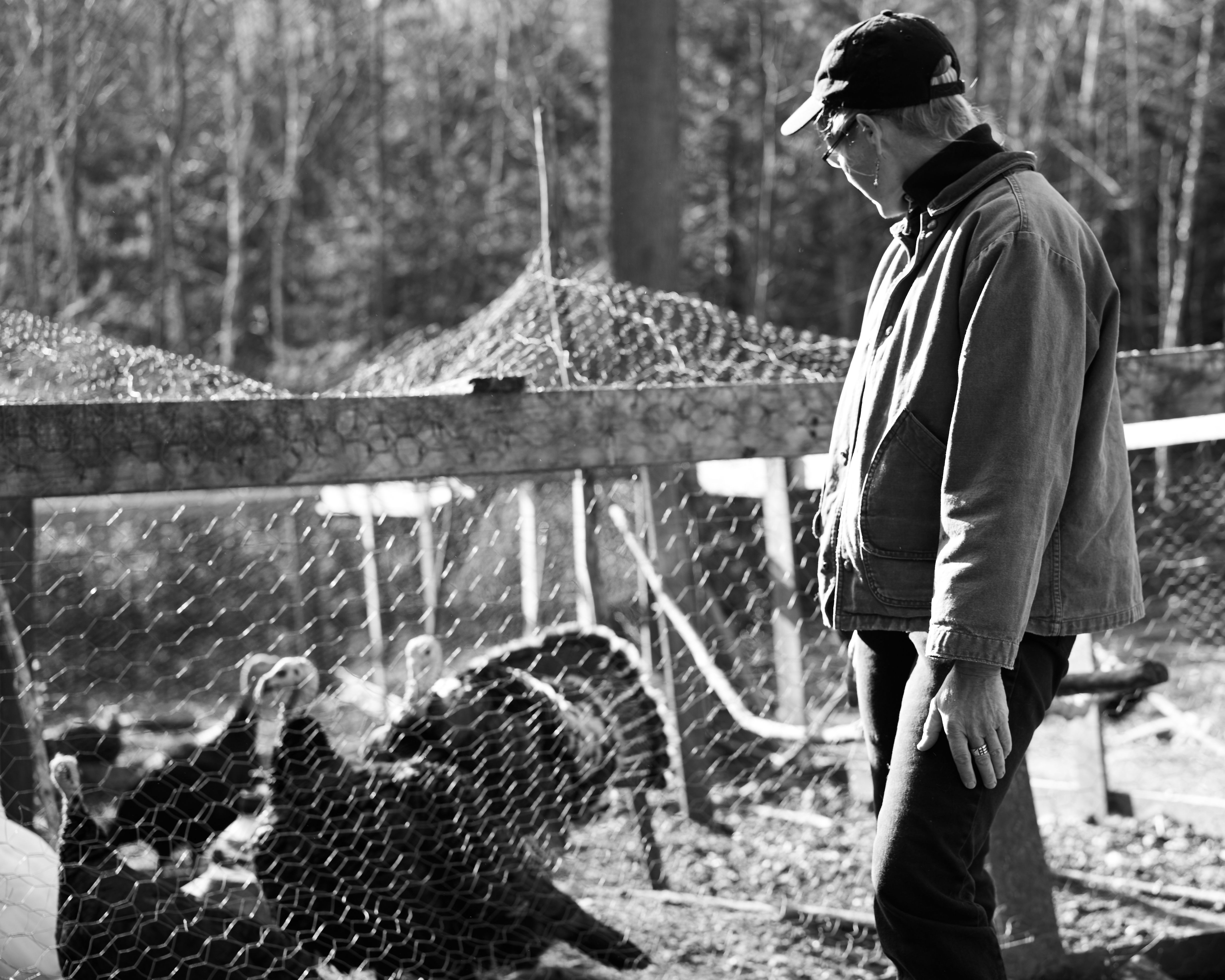
As part of this project, I had the opportunity to witness the butchering of hogs (one of which will feed my own family this winter). The resulting images are particularly personal for me. The backstory to why this encounter affected me so personally is that when I was five — I went on a tour of a turkey farm. I asked how they killed the turkeys and the answer resulted in me becoming a vegetarian for 25 years. Clearly, they did not believe in censoring for age! At first, I thought this part of the project was going to be difficult to witness and probably similar to a horror movie in real life. The actual experience, however, was very different. It turned out to be much more of a circle of life kind of thing where an animal that was treated with gentleness and loving care was humanely brought to the close of its life and processed in order to provide its gift of nutrition and sustenance to the family who raised it. It was humbling to witness a family and their neighbor farmers slaughter the pigs they had raised in order to feed their own families over the long cold winter.